

Brass has long been the dominant material in the commercial faucet industry. Stainless steel, particularly SUS304 and SUS316, offers distinct material advantages, but adopting stainless steel for large-scale commercial faucet production is far more complicated than simply switching from one metal to another. For manufacturers, changing materials means adapting machining methods, tooling, equipment settings, and accumulated production know-how. This is one of the key reasons why many companies that have been producing brass faucets for years have not readily made the transition to stainless steel.
The long-standing use of brass in faucet manufacturing is closely tied to its well-established machining processes. After years of production, manufacturers have developed relatively stable systems covering equipment, processes, and workforce expertise. Within such a production setup, continuing to use a familiar material helps reduce uncertainty in manufacturing.
Stainless steel, however, presents significantly different machining requirements.
SUS304 and SUS316 have relatively high strength and hardness, placing greater demands on tooling, cutting parameters, cooling conditions, and machining accuracy. Higher material hardness can increase machining loads during cutting and may also lead to greater tool wear, as well as challenges related to machining efficiency and surface quality.
Therefore, for a manufacturer accustomed to producing brass faucets, switching to stainless steel involves much more than simply purchasing stainless steel raw materials.
Machining stainless steel requires a set of process conditions that work together. Tooling is one of the first considerations. Tool materials with high hardness, wear resistance, and heat resistance need to be selected according to the machining characteristics of stainless steel and matched to the specific application. Cutting parameters are another critical factor. Cutting speed, feed rate, and depth of cut all need to be adjusted. Different machining conditions can directly affect tool life, production efficiency, and the quality of the finished components. Cooling also plays an important role. An effective cooling system helps control the heat generated during machining and reduce the effects of thermal deformation and tool wear. In addition, tool geometry and machine tool accuracy need to be suited to the characteristics of stainless steel. These factors do not operate independently. A change in any one part of the process can affect the final machining results. As a result, the ability to manufacture stainless steel products consistently comes from long-term process development and experience, rather than from equipment investment alone.
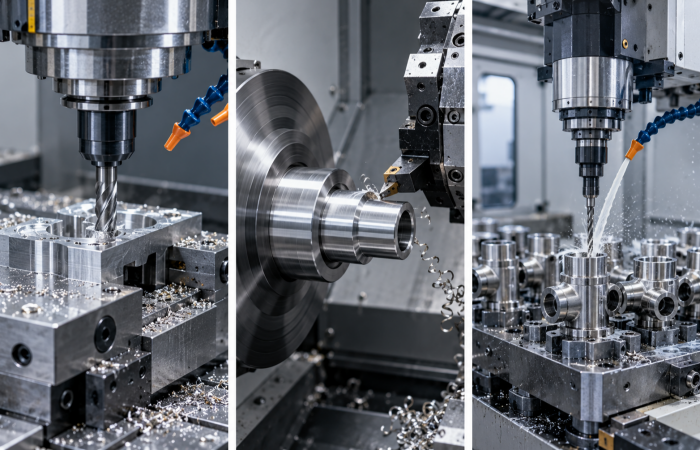
For companies that have already built a mature brass manufacturing system, changing the material requires new investment. Production equipment may need to be modified, and some equipment may even need to be replaced. Existing processes need to be revalidated, while production personnel need to learn new machining methods. At the same time, a transition to new technology can affect production efficiency and product consistency during the changeover period.
This issue can be particularly significant for large manufacturers. The extensive brass production equipment and processes they have accumulated over the years are already an integral part of their existing manufacturing systems. A comprehensive shift to stainless steel would therefore require them to reassess their existing equipment, process know-how, and production workflows. From a business perspective, continuing to use an established brass manufacturing system is therefore an understandable choice.
Changing a material strategy depends not only on technology but also on how a company operates. Bestware is one example. As a relatively small company focused on commercial stainless steel faucets, Bestware has been able to maintain a high degree of manufacturing flexibility. When machining technologies or equipment need to be adjusted, the company can adapt and reorganize its production processes more flexibly without having to carry the burden of a large, established brass manufacturing system. In 2013, Bestware began its transition toward stainless steel, entering a new direction in commercial faucet manufacturing based on stainless steel. This demonstrates that material innovation is, in essence, also a process of rebuilding a manufacturing system around a different material.
From an industry perspective, the relationship between brass and stainless steel should not simply be viewed as a matter of replacing one material with another. Brass already benefits from mature machining processes and an established supply chain, while stainless steel requires manufacturers to develop a different set of manufacturing capabilities. Therefore, the continued use of brass by many manufacturers does not mean that stainless steel lacks room for growth. As machining technologies continue to develop and manufacturers accumulate more experience in stainless steel production, stainless steel can continue to expand its application in the commercial faucet industry. For manufacturers, the real challenge is not simply deciding which material to use. It is whether they can build a manufacturing system that is suited to the characteristics of that material. Ultimately, the development of stainless steel commercial faucets depends not only on the material itself, but also on a manufacturer's long-term investment in machining technology, equipment, and production experience.