

In commercial kitchens, faucets are critical components rather than simple fixtures. Material selection directly affects operational efficiency and food safety. While brass faucets have long dominated the market, rising demands for health, environmental compliance, and durability have made stainless steel (304) an increasingly preferred choice for commercial and public applications.
With growing attention to food and drinking water safety, lead-free materials have become essential. Stainless steel 304 contains virtually no lead leaching and performs well below drinking water safety limits, making it suitable for direct contact with food and potable water.

Traditional brass inherently contains lead, which may pose long-term health risks. Low-lead or lead-free brass relies on higher copper purity, but this reduces material hardness and durability. Softer brass is more prone to deformation and wear, while higher purity also leads to higher material and plating costs, weakening its overall value proposition.
Stainless steel offers significantly higher hardness than brass, providing excellent resistance to impact and wear under high-frequency commercial use. Its strong corrosion resistance allows stable performance even in humid and high-temperature kitchen environments. In contrast, once the plating on brass faucets deteriorates, oxidation and verdigris can occur, affecting appearance and potentially contaminating water. Industry experience shows that stainless steel commercial faucets typically last up to twice as long as comparable brass products, significantly reducing replacement frequency and long-term maintenance costs.

As a non-porous material, stainless steel features a smooth surface that resists dirt and bacteria. Routine cleaning is simple and efficient, supporting fast-paced commercial operations. Brass faucets depend on surface plating, which may degrade over time, leading to stains and oxidation that increase cleaning effort and labor costs. In addition, stainless steel’s smooth internal surface helps reduce scale buildup and blockage risks.

Although stainless steel faucets generally cost more upfront, their extended service life and reduced maintenance requirements deliver better long-term value. Fewer replacements and repairs translate into lower overall operating costs. Moreover, stainless steel eliminates concerns related to lead and toxic verdigris, providing health benefits that extend beyond measurable cost savings.

Brass products inherently contain lead and typically rely on surface electroplating during manufacturing, which poses potential risks to both the environment and public health. In recent years, regulations in Europe and certain regions of the United States have increasingly restricted the use of chrome-plated materials due to concerns over hazardous substances released during production. Although trivalent chromium is considered less toxic and remains permitted, it comes with significantly higher processing costs. In contrast, stainless steel is naturally lead-free, requires no surface plating, and can be 100% recycled at the end of its service life, making it a more environmentally responsible and regulation-aligned material choice.

As market demand for health, durability, and environmental performance continues to grow, stainless steel faucets are seeing wider adoption in commercial kitchens, public drinking facilities, and schools. In the past, the application of stainless steel was limited by complex manufacturing processes. However, with the maturation of production technologies and surface finishing techniques, stainless steel faucets have shown increasingly clear advantages in appearance, performance, and functional flexibility. As a result, stainless steel is gradually replacing traditional brass and emerging as the new mainstream material in the industry.
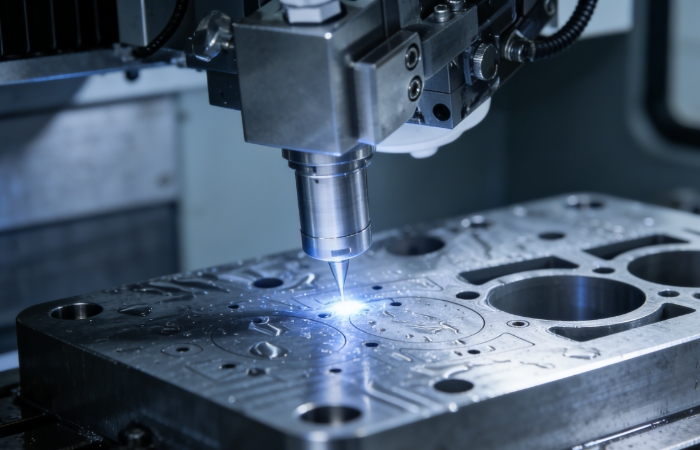
Overall, stainless steel 304, with its lead-free safety, high strength and durability, ease of cleaning and maintenance, and superior long-term cost efficiency, has become one of the most competitive materials in the commercial faucet sector. As early as 2013, Bestware identified this industry trend and firmly chose stainless steel as the core material for its next-generation commercial faucets. In 2015, Bestware took the lead in achieving large-scale mass production of fully stainless steel commercial faucets. Through years of continuous refinement and accumulation, Bestware has grown into a representative brand in the stainless steel commercial faucet industry and continues to drive the industry toward a healthier and more sustainable direction.