

A sensor faucet uses touchless sensing to control water flow, allowing users to activate the faucet simply by placing their hands near the sensor area without touching a handle or button. As a result, sensor faucets are increasingly used in public facilities such as schools, hospitals, hotels, airports, and office buildings.However, one often-overlooked issue in real-world applications is electromagnetic interference (EMI). A sensor faucet may operate near water pumps, motors, power equipment, and other electronic devices, all of which can generate electromagnetic interference during operation. If the sensing system does not have sufficient interference resistance, external electromagnetic signals may affect sensor performance, resulting in delayed or unreliable detection, abnormal responses, or even failure to activate the water flow.Therefore, for a sensor faucet, sensing range and response speed are not the only factors that matter. Resistance to electromagnetic interference is equally important for maintaining stable operation.
The basic operating principle of a sensor faucet is relatively simple. When a user's hand approaches the sensing area, the sensor detects the target and sends a signal to the control system, which then activates the solenoid valve to start the water flow.Under normal conditions, the process is straightforward:
Detect → Recognize → Dispense
However, the sensor does not only receive the signal it needs to detect. It can also be affected by the surrounding electromagnetic environment.For example, public restrooms may have several types of equipment operating near a sensor faucet:
· Water pumps and motors
· Power cables and electrical equipment
· Other electronic control devices
· Multiple sensor-controlled devices operating simultaneously
These devices can generate electromagnetic interference during operation. When the interference exceeds the sensing system's resistance level, it may interfere with normal signal detection.
This can result in:
Unreliable sensing → Abnormal response → Unstable water flow → Poor user experience
For public facilities, sensor faucets often need to operate continuously under high-frequency use, making sensing stability particularly important.
Electromagnetic field strength is commonly measured in V/m (volts per meter) when evaluating a device's resistance to electromagnetic interference. Generally, a higher value indicates that the device can maintain normal operation in a stronger electromagnetic environment.Some sensor faucets currently on the market have an interference resistance level of around 3 V/m. In relatively simple environments, 3 V/m may provide sufficient basic protection against interference.However, public facilities such as schools, hospitals, hotels, airports, and office buildings can have a much more complex electromagnetic environment, with multiple motors, pumps, and electronic devices operating simultaneously.Moreover, the electromagnetic environment is not always constant. Equipment switching on or off, as well as multiple devices operating at the same time, can cause fluctuations in surrounding electromagnetic conditions.For sensor faucets designed for long-term, stable operation, higher interference resistance provides greater operating stability and a wider performance margin.
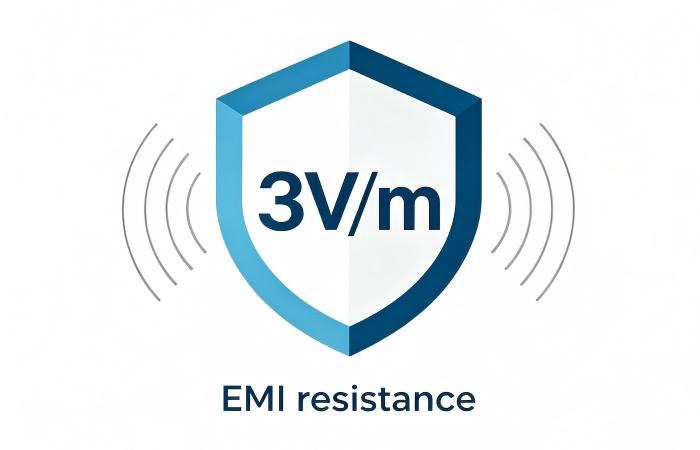
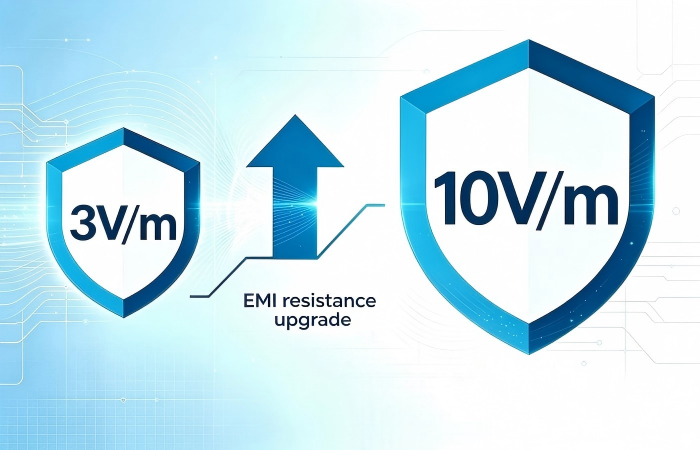
To address the potential impact of electromagnetic interference on sensor faucets, Bestware has adopted a higher level of interference-resistant design.Bestware sensor faucets feature a 10 V/m interference-resistant sensor solenoid valve, providing an interference resistance level of 10 V/m—a significant improvement over the commonly seen 3 V/m level of some sensor faucets on the market.
No. | Comparison | Conventional Sensor Faucet | Bestware Sensor Faucet |
1 | Interference Resistance | 3 V/m | 10 V/m |
2 | Sensing Method | Touchless sensing | Touchless sensing |
3 | Electromagnetic Interference Resistance | Basic | Enhanced |
4 | Impact from Nearby Electromagnetic Devices | More susceptible to interference | Less susceptible to interference |
5 | Suitability for Complex Public Environments | More susceptible to interference | Better suited to complex environments |
The improvement from 3 V/m to 10 V/m is not simply an increase in a specification. It means the sensing system can withstand stronger external electromagnetic interference, helping reduce the impact of surrounding equipment on sensor operation.In other words, when the electromagnetic environment becomes more complex, higher interference resistance gives the sensing system a greater margin for stable operation.
In residential environments, there are generally fewer electronic devices nearby, so the electromagnetic environment is usually relatively simple.Public facilities are different. In schools, hospitals, hotels, airports, and office buildings, sensor faucets may operate alongside various motors, electrical systems, and electronic devices.In these environments, a sensor faucet needs to do more than simply detect a user's hands—it needs to maintain stable sensing performance in a complex electromagnetic environment.Bestware's 10 V/m interference-resistant design enhances the sensing system's ability to withstand external electromagnetic interference, helping reduce the impact of nearby motors and other electrical equipment.The direct benefits are:
More stable sensing → More reliable response → More consistent water dispensing
Even in relatively complex electromagnetic environments, this helps the sensor faucet maintain more reliable sensing performance.

Interference resistance addresses whether sensing remains stable, while touchless operation addresses whether users need to physically touch the faucet.Traditional faucets require users to operate a handle, button, or other control component directly. A sensor faucet controls water flow through touchless sensing, allowing users to simply place their hands near the sensing area to activate the water without touching the faucet's controls.In high-traffic public environments such as schools, hospitals, hotels, airports, and offices, reducing repeated contact with the same control components can make handwashing more convenient.However, stable sensing is essential for fully realizing the benefits of touchless operation. If the sensor is easily affected by electromagnetic interference, the touchless experience can also be compromised.
Touchless operation is the foundation. Stable sensing is the key.
The core of a sensor faucet is not simply that "water flows when you place your hand nearby." What truly affects the user experience is whether the entire sensing system can maintain stable operation under different conditions.From receiving the signal and detecting the target to activating the solenoid valve, every step needs to work reliably.Therefore, electromagnetic interference resistance is an often-overlooked but important performance factor for sensor faucets.Some sensor faucets on the market offer around 3 V/m of interference resistance, while Bestware increases this level to 10 V/m, giving the sensing system stronger resistance to electromagnetic interference.
3 V/m provides basic interference resistance.10 V/m provides a greater margin for stable operation.
The advantage of a sensor faucet is not simply touchless operation. In real-world public environments, the faucet must also operate reliably in complex electromagnetic conditions. If the sensing system is easily affected by interference, even a well-designed touchless faucet may not deliver its full potential.The increase from the commonly seen 3 V/m level of some sensor faucets to 10 V/m with Bestware represents more than a higher specification. It provides the sensing system with a greater margin for stable operation in complex electromagnetic environments.With a 10 V/m interference-resistant sensor solenoid valve + touchless sensing, Bestware helps reduce the impact of surrounding electromagnetic interference and enables sensor faucets to maintain stable and reliable performance in demanding public environments.
Touchless operation for greater convenience.10 V/m for more stable sensing.